27 Mar
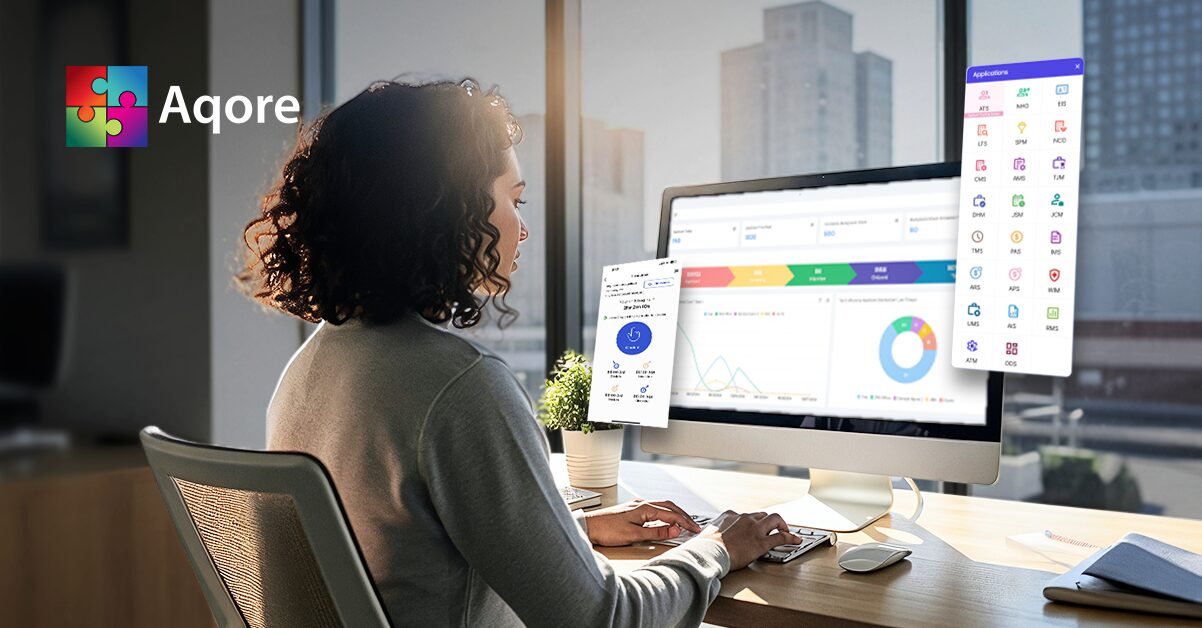
A recruiter sits down to use the laptop and is ready to act quickly, but the day begins with a disaster of tabs: ATS, CRM, payroll, onboarding, reporting, time tracking, email, and text messages. In staffing, that is more than inconvenient. It makes the team slower, leaves more space to make mistakes, and distracts them from the actual work: hiring, placing, and supporting people. A survey of workers using Microsoft 365 by the Microsoft 2025 Work Trend Index reveals that every 2 minutes, employees are interrupted by a meeting, email, or notification, which is another effective reminder of how disjointed the modern working day has become.
The relevance of that pressure in staffing is that the industry is expensive, hectic, and highly functional. According to the American Staffing Association, approximately 11 million employees and career opportunities were offered by the staffing industry in 2024. Approximately 2.2 million employees were temporary and contract workers at staffing companies on average in 2024. The agencies require technology that will enable them to operate at a high pace in a market that is dynamic market without forgetting details.
Source: ASA
The real problem: fragmented systems slow staffing teams down
Most of the staffing teams do not waste time, as they are not fast. They are wasting time due to the division of their work into an excessive number of systems. One tool has the recruiter inputting the details of a candidate, and the other system takes the same information and inputs it into the onboarding or payroll system. One report is drawn out of the ATS and another out of the payroll by a manager to get a clue about what is going on. A client update only delays because the information is in the wrong place.
This drives agencies to all-in-one staffing software integrated systems that eliminate manual work and data duplication. When recruiting, onboarding, and payroll data flows automatically, teams focus on candidates and clients, not tab-juggling.
What All-In-One Staffing software changes
All-in-one staffing software connects the major parts of the staffing lifecycle in one platform.
That usually includes:
- ATS and recruiting
- CRM and client management
- Onboarding
- Payroll and billing
- Workforce management
- Reporting and analytics
- Mobile access for recruiters, workers, and internal teams
The main benefit is simple: one workflow, one source of truth, fewer handoffs.
Recruiters can move faster from candidate search to placement. Operations teams can keep onboarding and payroll aligned. Managers can see what is happening without pulling data from multiple tools. Candidates and clients get quicker responses.
Why connected systems matter for compliance
Staffing companies also must be careful about compliance, particularly in onboarding. According to USCIS, employees must fill out and sign Form I-9, Section 1, not later than the beginning of their first workday, and employers must fill out and sign Form I-9, Section 2, within three business days. It implies that the staffing teams will require a procedure that can be followed, traced, and managed very easily in the beginning.
It is difficult to say the least, so a disconnected system only complicates it. Being connected provides an easy way to maintain documents, deadlines, and the records of employees in a single site to minimize the risk of missing out on a step and ensure that teams remain audit ready. In the case of staffing agencies, it is not a minor workflow enhancement. It is a factual working protection.
Source: U.S. Citizenship and Immigration Services – Form I-9 Section 1
Why AI makes this even more important
Artificial intelligence is increasingly taking up a larger role in staffing, yet it requires management. According to the EEOC, AI and other automated technologies are already employed in recruiting, screening, hiring, monitoring, pay, promotion, and termination, and such tools may continue to pose a risk of discrimination if they are not used efficiently.
It is particularly noteworthy in recruitment and hiring when individuals are already concerned about fairness. A unified staffing platform is simpler to track than a fragmented stack, since all data, workflows, and decision points are centralized. This simplifies the task of observing what the system is about, how it is being utilized and where a human being ought to intervene.
Why staffing teams care about one platform, not just more software
The best argument for all-in-one staffing software is not that it sounds modern. It is that it makes the work easier.
Recruiters spend less time switching systems. Operations teams spend less time reconciling data. Managers get better visibility. Candidates experience fewer delays. Clients get faster updates.
When the workflow is connected, the whole agency moves with less friction.
Why the future of staffing belongs to connected systems
Aqore is built for staffing teams that want one connected system instead of a patchwork of tools.
It brings recruiting, onboarding, payroll, workforce management, reporting, and mobile access into one place so teams can handle the staffing lifecycle more efficiently. The goal is not just to replace software. The goal is to simplify the way staffing work gets done.
For agencies that want fewer handoffs, less duplicate entry, and better visibility across the process, that kind of platform can make a real difference.
What staffing companies gain from switching
A move to connected staffing software can improve more than just speed.
It can also improve:
- Data accuracy
- Team visibility
- Compliance tracking
- Internal coordination
- Candidate experience
- Client communication
For agencies that are growing, those gains matter. The larger the team and the more moving parts involved, the more valuable a connected system becomes.
The future of staffing is connected
Staffing will always be a fast-moving business. Teams will always need to recruit, onboard, place, pay, and support people under pressure.
The future is not about adding more software to the stack. It is about using fewer, better-connected systems that help teams work smarter.
That is why all-in-one staffing software is becoming the stronger choice for agencies that want better control, better visibility, and a smoother workflow from start to finish.
Final Thoughts
If your team spends too much time switching between systems, the problem may not be the people.
It may be the stack.
Manage your staffing workflow in one platform with Aqore.
FAQ
What is all-in-one staffing software?
All-in-one staffing software is a single platform that combines the main staffing workflows, such as ATS, CRM, payroll, onboarding, and workforce management, into one system.
Why do staffing agencies use all-in-one software?
Staffing agencies use all-in-one software to reduce manual work, avoid duplicating data entry, improve visibility, and keep recruiting and back-office work connected.
What is the difference between staffing software and a staffing platform?
A staffing platform usually does more than one job. Instead of handling only applicant tracking, it connects more of the workflow, including payroll, onboarding, reporting, and workforce management
How does all-in-one staffing software help with compliance?
It helps by keeping hiring and employee data in one place, which makes it easier to manage I-9 timing, recordkeeping, and workflow tracking. USCIS says Section 1 must be completed by the first day of employment and Section 2 within three business days.
Is AI safe to use in staffing software?
AI can be useful, but it needs oversight. The EEOC says AI is already being used in recruiting and hiring and can still create discrimination risks if it is not designed and monitored carefully.