20 Mar
In today’s ever-evolving corporate landscape, the imperative of fostering an inclusive workplace has transcended mere moral obligation and become a strategic necessity. In 2026, U.S. staffing agencies operate in a market where talent diversity is no longer a nice-to-have, it’s a competitive advantage.
This guide will take you through the top 5 strategies for creating an inclusive workplace that champions diversity and fuels organizational triumph.
From unraveling the nuances of “how to be inclusive in the workplace” to examining real-life “inclusive culture examples,” we will provide actionable insights to empower you in addressing the pivotal question, “How can I enhance inclusivity in my workplace?” Embark on this journey with us as we uncover the essential steps to cultivate a work environment that embraces diversity and nurtures innovation, propelling your business to new pinnacles.
These strategies for building an inclusive workplace go beyond mere checkbox exercises; they represent the path to a brighter, more equitable future for your organization. Join us as we explore how you can metamorphose your workplace into an inclusive sanctuary.
What is an inclusive workplace?
An inclusive workplace celebrates diversity and ensures that all employees, regardless of their background or unique characteristics, feel valued, respected, and supported. It’s a work environment where individuals from varied backgrounds, perspectives, and abilities can thrive, collaborate, and contribute to their full potential.
In an inclusive workplace:
- Diversity is actively embraced across all dimensions.
- Fairness, equality, and respect are non-negotiable standards.
- Barriers to participation and advancement are removed.
- Open communication and collaboration create a true sense of belonging.
- Accommodations and support are built in so everyone can perform at their best.
Why is building inclusive workplaces matters in 2026?
Fostering inclusive workplaces is of paramount importance in today’s corporate landscape. Here’s why it’s a strategic imperative:
- Enhanced Innovation: Inclusivity brings together diverse perspectives, leading to creative problem-solving and innovative ideas.
- Boosted Employee Engagement: Inclusive environments increase job satisfaction, motivation, and employee commitment.
- Attracting Top Talent: Inclusive workplaces are more appealing to a broader range of candidates, allowing for a diverse and talented workforce.
- Reduced Turnover: Employees are more likely to stay in organizations where they feel valued and included, reducing recruitment and training costs.
- Improved Performance: Diverse teams outperform homogenous ones by drawing on various experiences and skills.
- Enhanced Reputation: Organizations known for inclusivity are perceived more positively by customers, clients, and partners.
- Legal and Ethical Compliance: Compliance with diversity and inclusion regulations is essential to avoid legal issues and promote ethical business practices.
- Market Competitiveness: Meeting the diverse needs of a global customer base requires an inclusive approach to product development and marketing.
- Social Responsibility: Building an inclusive workplace aligns with broader societal values, contributing to social harmony and progress.
- Inclusivity is the Future: As society becomes more diverse and inclusive, organizations that don’t adapt risk falling behind in an evolving marketplace.
Five strategies for creating an inclusive workplace
This guide will explore five essential strategies for creating an inclusive workplace. These strategies help organizations cultivate an environment where diversity is celebrated, and every employee can bring their unique perspectives and talents. By embracing these strategies, you’ll be well on your way to building a more inclusive, productive, and harmonious workplace for all. Let’s explore these strategies to discover how they can benefit your organization and its employees.
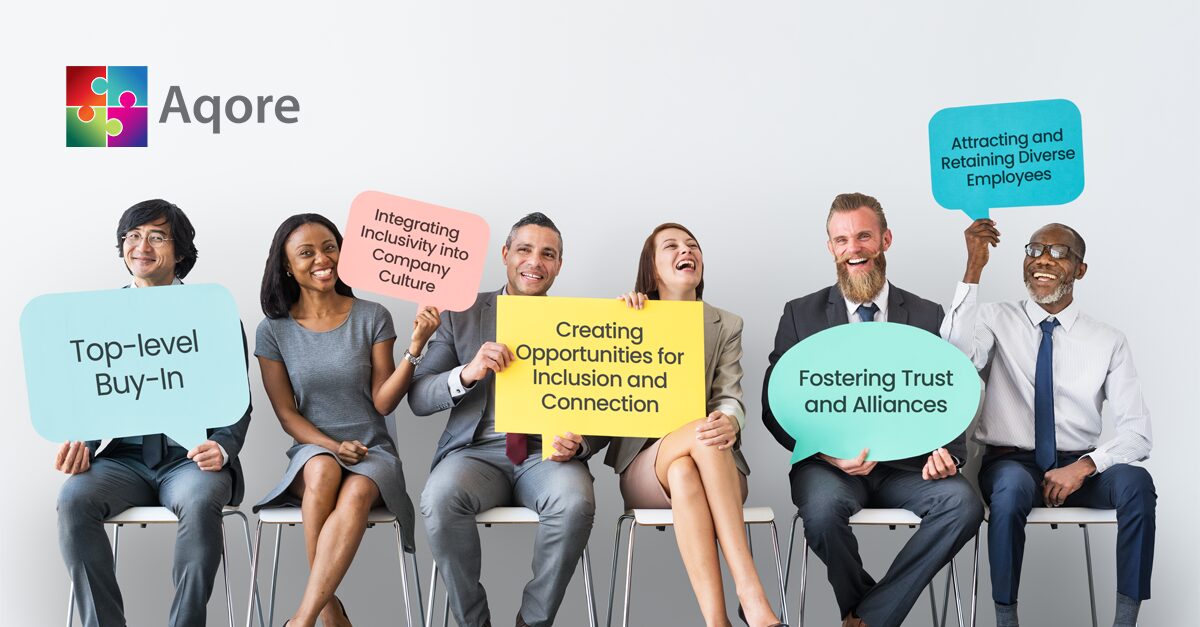
Top-level Buy-In
Getting support from your leadership team is crucial when creating and promoting an inclusive workplace. Educate your leaders about the importance of inclusivity, offer diversity, equity, and inclusivity training, and create a safe space for them to ask awkward questions. Once they’re comfortable and on board, they’ll be fantastic resources for setting an authentic, inclusive tone for all. Remember, inclusivity should be a priority because it leads to innovation, increased cash flow, and employee engagement. Let’s aim to get everyone on board and make inclusivity a business goal.
Integrating Inclusivity into Company Culture
Establishing inclusivity as a priority means creating an environment where every voice is heard and everyone feels valued and respected. Inclusivity should be integrated into every aspect of the business, from hiring practices to team-building exercises. Consistency in inclusivity practices should be maintained to avoid discrimination or biases. When employees see that inclusivity is a top priority for the company, they feel more engaged and motivated in their work. Inclusivity should be viewed as a core value that drives the business forward rather than a checkbox to tick off.
A study by Deloitte found that companies with inclusive cultures are more innovative and have higher employee engagement scores.
Creating Opportunities for Inclusion and Connection
It’s easy for employees to get caught up in their immediate team, and they need to remember to connect with their colleagues from different departments.
This is where you come in. Fostering a culture of inclusivity means encouraging connection across teams, not just within them.
Here are a few simple yet effective strategies to promote a more inclusive workplace:
Encourage Cross-Team Interaction
Formal opportunities like town hall meetings are great, but casual settings often build stronger bonds. Consider organizing:
Company-wide lunches
Happy hours
Volunteer days
Cross-departmental team-building activities
These help employees engage beyond their usual circles.
Normalize the Use of Gender Pronouns
Inclusive behavior starts with small habits. Adding your preferred pronouns to email signatures, Slack names, or org charts (e.g., “Candice Mitchell, she/her” or “Jameson Alex, they/them”) demonstrates awareness and respect.
Encourage company-wide adoption by:
Including pronouns in email signature templates
Offering training on gender identity and inclusivity
Make Space for Introverted Voices
Traditional corporate culture often rewards extroverts — but that doesn’t mean quieter employees lack ideas or leadership potential. Managers should be trained to:
Proactively invite input from everyone during meetings
Allow time for reflection and written feedback
Support introverts further by:
Funding noise-canceling headphones
Using anonymous pulse surveys or suggestion boxes
Designating quiet zones for solo work and meals
Fostering Trust and Alliances
Authentic bonding among team members is essential for creating an inclusive work environment. This type of bond requires respect for all traditions and cultures.
Everyone feels accepted in an inclusive workplace, and individual greatness is recognized.
One way of fostering positive relationships among team members is by allowing them to share their passion projects or favorite hobbies outside of the office. Creating an environment where individuals can freely share their ideas requires trust and alliance.
Activities such as nominating a team player using one word to describe their greatness can be a highly emotional barrier-breaker while encouraging your team to build positive and trusting workplace relationships.
Peer-to-peer mentorship programs can also help team members to connect on a deeper level and create meaningful connections.
Remembering small efforts such as showing appreciation, recognizing individual greatness, or creating a safe space for personal discussions can go a long way in building an inclusive workplace.
Fostering trust and alliances takes time, so be patient and celebrate achievements, no matter how small.

Attracting and Retaining Diverse Employees
Recruiting and hiring is the first step towards building an inclusive workplace culture. It is essential to implement conscientious recruiting practices to attract diverse job candidates.
This can be done by writing inclusive job descriptions and outreach strategies that target historically underrepresented groups. Avoiding biased interview questions and ensuring diverse representation on interview panels can also positively affect the hiring process.
Effective onboarding is equally important in retaining team members to ensure they feel welcomed and included in the company culture. Providing accommodations and embracing cultural differences can help individuals from diverse backgrounds feel connected and comfortable in the workplace. Encouraging various employee resource groups can also give team members a supportive community within the larger organization.
Continuous DE&I training is imperative for all employees to ensure a comprehensive understanding of inclusivity and its importance in the workplace.
It is vital to educate management and leadership on best practices for diversity and inclusion and encourage them to model inclusive behavior.
Additionally, equal opportunities for advancement and promotions can keep employees motivated and engaged. Creating more diverse and inclusive leadership teams can positively influence the growth and future of the organization.
Building a Better Future: Strategies for Creating an Inclusive Workplace
The top 5 strategies for creating an inclusive workplace are no longer optional for U.S. staffing agencies, they are essential for growth, retention, and client satisfaction in 2026.
By securing leadership buy-in, embedding inclusion in culture, creating real connections, fostering trust, and focusing on attraction and retention, staffing firms build teams that are more engaged, innovative, and effective.
Driving inclusivity initiatives is a must in today’s diverse workplaces. Companies prioritizing inclusivity as a business goal reap the rewards of a more innovative and engaged workforce. Encouraging social interaction, accepting pronouns, and empowering introverts are a few ways to foster inclusion in the workplace.
Creating authentic bonds, respecting diverse traditions, recognizing individual strengths, and implementing peer-to-peer mentorship programs build trust and collaboration. Companies must uphold conscientious recruitment practices, conduct continuous DE&I training, and ensure equal opportunity advancements to attract and retain diverse employees.
Overall, investing in inclusivity has numerous benefits that positively impact business success.
At Aqore, we designed Zenople to support exactly this kind of inclusive operation. Our AI-powered candidate recommendations reduce unconscious bias, the mobile app makes onboarding and time tracking accessible to everyone, self-assignment features give workers greater autonomy, and intelligent workflows ensure fair, consistent processes across your entire organization.
Ready to turn these strategies into daily reality for your staffing firm?
Frequently Asked Questions (FAQs)
An inclusive workplace is one where all the employees feel valued, respected, and accepted. This must be inherent within the organization’s system, where there is a fair environment for everyone to grow, develop, communicate, collaborate, and be productive.
Building an inclusive workplace has many benefits, such as improved retention rates, enhanced productivity and performance, increased employee satisfaction and engagement rates, improved mental well-being of every employee, and better awareness of the significance of promoting diversity, equity, and inclusion (DEI), reduce issues like biases and favoritism, facilitates an equal opportunity for all, enhances employee satisfaction and employee engagement rates, reduces unwanted competition and toxicity in your organization, increases connection and collaboration among employees, improves employer brand value and recognition, creates better morale and social consciousness in employees, enhances creativity, innovation, and problem-solving abilities in employees, increases organizational flexibility and diversity, creates momentum for your organization’s other DEI activities, and attains business growth and better market share.
To celebrate each team member’s differences, organizations can offer time off for religious or cultural holidays, host informal conversations where colleagues share interesting facts about their cultures and traditions and accommodate and learn about each other’s customs and traditions to foster a culture that makes employees feel recognized and valued.
It is essential to be fair in project placement and promotions to avoid unsupported judgments in favor of or against one thing, person, or group. This helps to spread high-visibility tasks across your organization, share your promotion processes, and ensure that biases are avoided when important decisions are made within your company.
There are many strategies for creating an inclusive workplace. Still, some unique methods include:
- Top-level Buy-In
- Integrating Inclusivity into Company Culture
- Creating Opportunities for Inclusion and Connection
- Fostering Trust and Alliances
- Attracting and Retaining Diverse Employees
Organizations can focus on incorporating inclusive language by using gender-neutral language, avoiding derogatory or discriminatory language, and using person-first language.
Creating effective affinity groups helps employees with similar backgrounds, identities, or experiences build community and create a space for themselves in the larger workplace culture.