Staffing software helps you run and grow a staffing business.
If you place candidates with clients, manage bill/pay rates, or care about margins, staffing software is built for you.
In 2026, the U.S. staffing market has stabilized at a massive $183.3 billion. But while the market is growing, so is the cost of doing business. Source: SIA
Most staffing firms don’t struggle because they lack candidates. They struggle because their systems were never designed for how staffing works specifically, redeployment, pay-and-bill, and real-time margin tracking.
This is where the ATS vs Staffing Software decision becomes critical.
That’s why operational efficiency has become the top priority for agency leaders this year.
An Applicant Tracking System (ATS) is software designed to manage the hiring process for a single employer. It tracks a candidate from the job application to the final hire.
The global ATS market is projected to reach $18.57 billion in 2026 . However, most of this growth is driven by corporate HR departments (like banks or retail chains) hiring for themselves. Source: Fortune Business Insights
When an ATS Works:
You are hiring internally for your own office staff.
Recruiting is a “cost,” not how you make your money (no billing/invoices).
Once a person is hired, the job is finished.
Where ATS Falls Short for Agencies:
Agencies don’t just “hire.” They redeploy. In staffing, a hire is just the beginning. An ATS alone cannot handle:
Managing multiple clients with different bill rates.
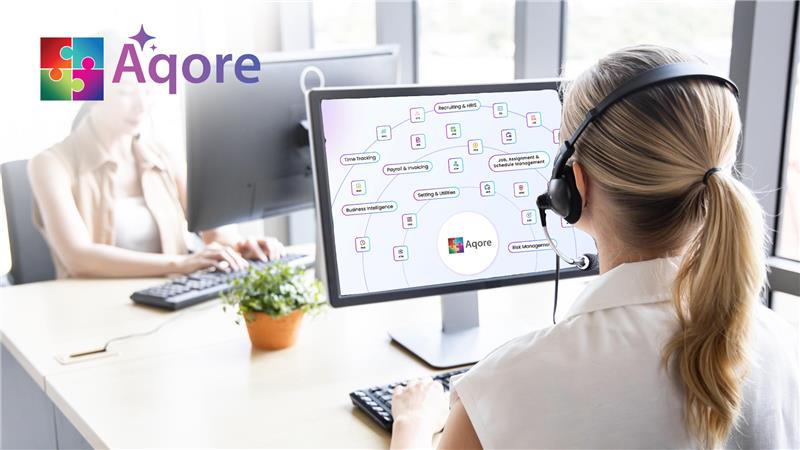
Staffing software is built specifically for revenue-driven agencies. It handles the “full desk” from finding a candidate to invoicing the client.
The global market for staffing agency software is reaching $697.3 million in 2026. Agencies are moving away from “Frankenstein” tech stacks (using 5 different apps) in favor of one unified platform.
What a Modern Staffing Platform Includes:
A Modern platform like combines the following into one login:
Full ATS Functionality: Candidate sourcing and tracking.
Client CRM: Managing job orders and sales pipelines.
Back Office: Time and attendance, invoicing, and automated payroll..
Financial Reporting: Real-time visibility into margins and recruiter performance.
ATS vs Staffing Software: The Real Difference
The difference between ATS and staffing software becomes clear when you compare how each system supports daily agency operations.
Feature
Standard ATS
Staffing Software
Who is it for?
Internal HR Teams
Staffing Agencies
Main Goal
Fill a job opening
Grow a profitable business
Client Tracking
Very basic or none
Full Sales & CRM tools
Billing & Payroll
No (requires extra tools)
Yes (built-in)
Redeployment
Hard to do
Easy (moves workers to new jobs)
ATS helps you hire. Staffing software helps you scale and stay profitable.
Problems Staffing Software Actually Solves
A. The “Separate Systems” Problem Many agencies use one tool for candidates, another for billing, and spreadsheets for tracking. This leads to manual errors. With a unified platform, a placement automatically connects the candidate to the timesheet, payroll, and invoice without copy-pasting.
B. No Real-Time Profit Visibility Profit should never be a month‑end surprise. Staffing software shows expected margins before a placement is confirmed.
Industry data shows a single bad hire can cost an agency $14,900 in lost fees and productivity.
(Source: CareerBuilder).
C. Faster Redeployment In 2026, the cost to find a new candidate is at an all-time high ($4,700 per hire). If you aren’t redeploying contractors, you are throwing money away. Aqore’s AI-powered matching Alerts you before an assignment expires so you can keep your best talent working.
Pricing Comparison
Average ATS Cost: $60 to $120 per user/month.
Average Staffing Software Cost: $100 to $400 per user/month.
While ATS looks cheaper, agencies using them often pay an extra $150+ for SMS engagement tools, CRM, and payroll software. A unified platform usually results in a lower total cost of ownership. Source: Crozdesk 2026 Price Guide
How to Choose?
Choose an ATS if: You only hire for internal roles and have no external clients.
Choose Staffing Software if: You manage multiple clients, track bill/pay rates, and need to grow your profit margins.
Where Aqore Fits
Aqore is built for staffing owners and operators, not corporate HR teams.
By combining recruiting, client management, timesheets, payroll, and invoicing into one platform, Aqore removes manual work and system gaps. Agencies using unified platforms gain better visibility, faster workflows, and stronger financial control. Ready to see the difference?
Is it hard to switch from an ATS to Staffing Software?
Not anymore. Modern platforms use AI-driven mapping to automatically clean, organize, and transfer your data. Specialized teams handle the technical setup, so you start with a fresh, organized database without losing candidate history or resumes.
Does staffing software actually provide a better ROI?
Yes. While ATS tools often have a lower upfront cost, most agencies spend extra on texting, CRM, payroll, and billing tools. Consolidating these into a single platform reduces total costs and improves margin visibility.
Can an ATS handle "Pay-and-Bill" for contractors?
Generally, no. Most ATS platforms stop the moment a candidate is hired, leaving you to handle complex payroll and invoicing in separate, messy spreadsheets. Staffing software connects the placement directly to the timesheet and the client’s invoice.
Will switching help me find candidates faster?
Absolutely. With the average cost-per-hire hitting $4,700 in 2026 due to rising ad fees, you can't afford to ignore your own database. Aqore’s AI-powered matching surfaces the best candidates already in your system in seconds, reducing your "time-to-fill" by leveraging the talent "gold mine" you’ve already built.
How do you handle the new 2026 AI compliance laws?
AI in hiring is more regulated now. Our system doesn’t reject candidates in secret. Instead, it explains why each candidate is recommended, so recruiters stay in control, and your agency stays compliant.
Final Takeaway
The ATS vs Staffing Software decision ultimately depends on whether you are hiring internally or running a revenue-driven staffing agency.If your agency only hires internally, an ATS may be enough. But if you place candidates, bill clients, and care about margins, staffing software is essential in 2026.
A unified platform like Aqore helps staffing agencies operate efficiently, stay profitable, and scale without complexity.